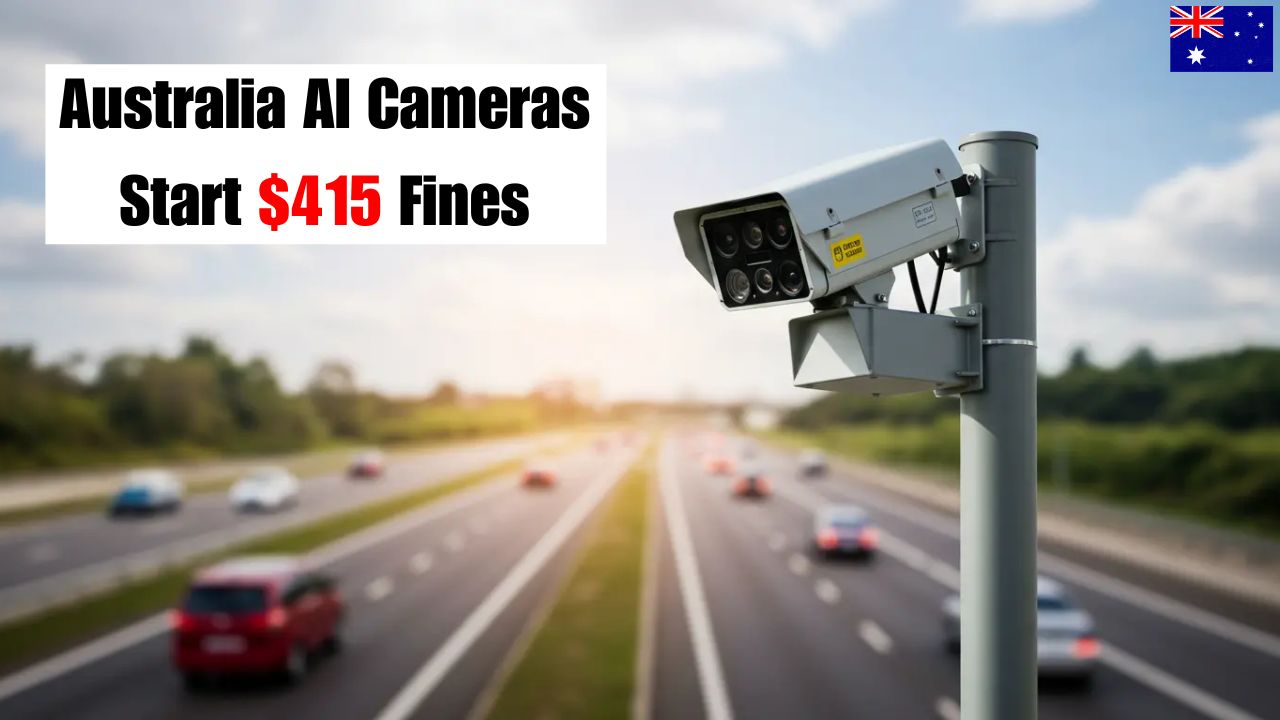
Australia has begun rolling out new AI-powered traffic cameras capable of issuing $415 rolling-red fines, catching thousands of drivers off guard. These advanced cameras don’t just monitor vehicles running red lights they now detect rolling stops, late amber entries, and hesitation movements before the stop line. Many motorists are stunned to learn that they can be fined even if their car never crosses the intersection.
What the New AI Traffic Cameras Are Detecting
Unlike older camera systems, the new AI units analyse vehicle movement frame-by-frame. This allows authorities to detect subtle violations that previously went unnoticed.
The cameras can now identify:
• Rolling forward during a red light
• Stopping after the line, even if only slightly
• Entering the intersection a fraction of a second after amber
• Hesitation creeping while waiting for a turn arrow
• Illegal partial entry when pedestrians have right of way
These micro-movements once ignored are now treated as red-light offences.
Why Rolling-Red Offences Now Come With a $415 Fine
A rolling-red offence occurs when a vehicle:
• Moves forward during a red light, or
• Stops past the designated white line
Even if a driver stops before crossing into the intersection, the movement itself can be penalised.
Authorities say the stricter rules aim to:
• Reduce intersection crashes
• Protect pedestrians and cyclists
• Improve compliance at high-risk crossings
• Prevent “creeping” behaviour that leads to collisions
In most states, rolling-red offences carry:
• A $415 fine
• 3–4 demerit points
(Exact penalties vary by state.)
Drivers Shocked: “I Didn’t Even Cross the Line!”
Social media has been flooded with complaints from drivers surprised to receive fines despite believing they obeyed the rules.
Common scenarios drivers are being fined for:
• Slightly rolling forward while waiting for a green arrow
• Stopping 10–20 cm past the line
• Entering the crossing while turning during late amber
• Creeping forward in heavy traffic
• Back wheels not fully behind the line
AI cameras measure position digitally, so even tiny offences trigger fines.
Updated Enforcement Rules (Across Most States)
Here’s a quick breakdown of how rolling-red rules now work:
| Violation | New AI Detection | Penalty |
|---|---|---|
| Rolling forward on red | Yes | $415 + demerits |
| Stopping slightly past the line | Yes | Treated as red-light offence |
| Entering on late amber | Yes | Same as red-light running |
| Illegal right-turn creep | Yes | $415 fine |
| Pedestrian interference | Yes | Higher penalties possible |
These updates apply to more intersections every month as new cameras go live.
Why Australia Introduced AI Enforcement
Road authorities say the upgrade was needed because:
• Intersection crashes were rising
• Many drivers exploited “grey areas” of old cameras
• Pedestrian near-misses increased in major cities
• Manual enforcement couldn’t keep up with traffic volume
• AI provides consistent, unbiased monitoring
The goal is to reduce fatalities and prevent risky “edge-case” driving behaviour.
How Drivers Can Avoid New Rolling-Red Fines
To stay safe under the new rules:
• Come to a complete stop well before the white line
• Avoid creeping forward during red or red-arrow phases
• Slow down early at amber lights don’t “push the yellow”
• Maintain visibility of the stop line in heavy traffic
• Allow extra stopping distance at wet intersections
If unsure, stay behind the line until the light turns green.
Conclusion:
Australia’s new AI traffic cameras are reshaping how red-light offences are enforced. With $415 rolling-red fines, drivers must now be more cautious than ever stopping fully, staying behind the line, and avoiding even minor forward movements. These changes aim to improve safety, but they also require drivers to adjust long-standing habits.
Disclaimer: Penalties and enforcement rules may vary across Australian states and territories. Information in this article reflects general guidance and early rollout details. Always refer to your local road authority for official regulations.